
“Loungewear” and “pajamas” get used interchangeably in casual conversation, and for most of history the distinction didn’t matter much — you had daytime clothes and you had sleep clothes, and nobody needed a third category. Working from home created a real reason to care about the difference, because it created a third category of time: hours spent at home, awake, working, that are neither a normal “day” in the going-out sense nor actually bedtime. Buying for that third category means understanding what separates the two.
Pajamas: Built for Being Asleep
Pajamas are designed around a single job: being comfortable while unconscious for seven or eight hours. That means breathable, temperature-regulating fabric, a looser fit that won’t bind while you toss and turn, and typically a matching top and bottom set. What pajamas are not designed around is being seen — by a delivery driver, a neighbor, or a coworker on camera. That’s not a flaw, it’s just outside the design brief.
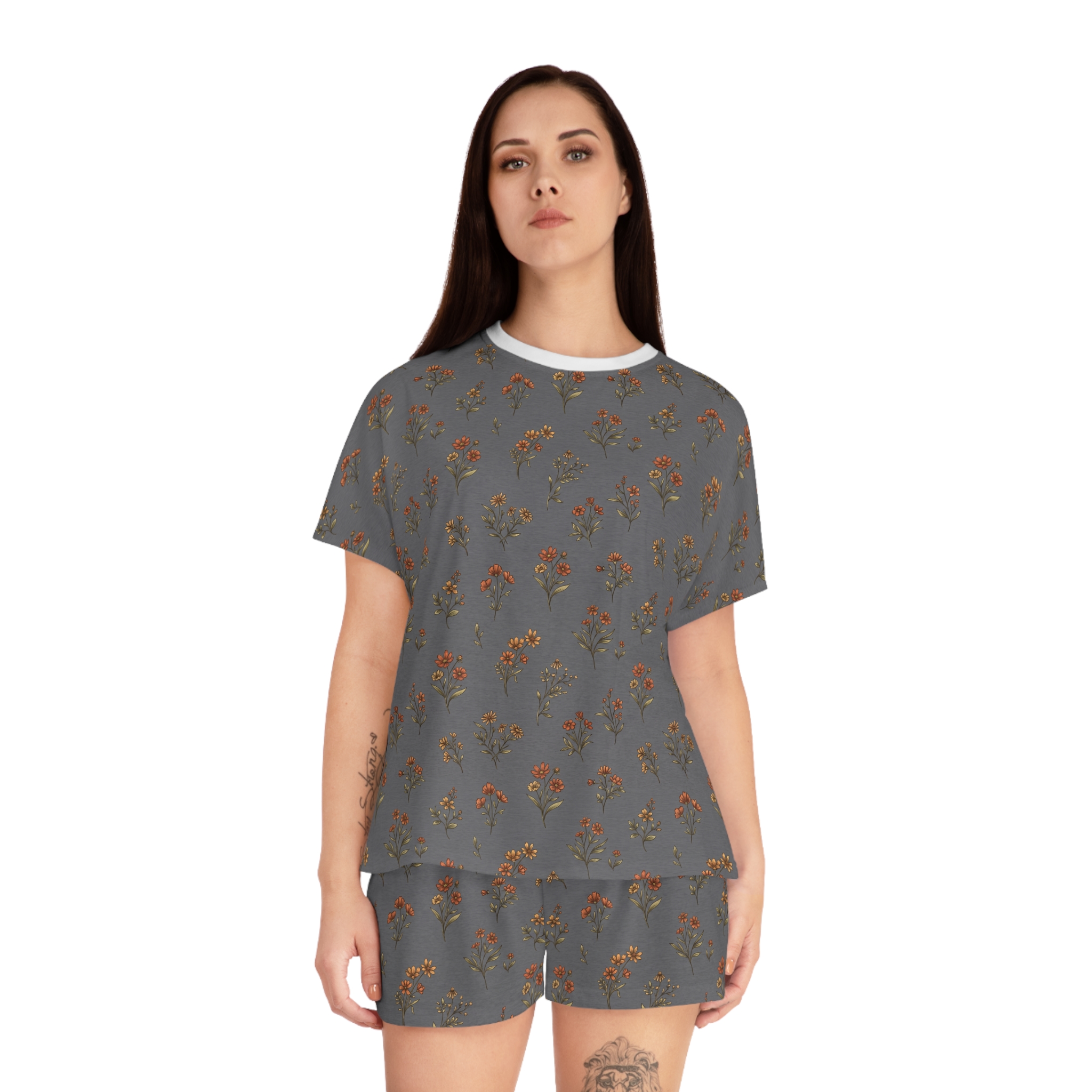
A vintage rose short-sleeve pajama set is a straightforward example of this category done well: soft, breathable, genuinely comfortable to sleep in, with a print and fit that make it presentable enough to answer the door in a pinch — but it’s still fundamentally sleepwear, and it shows in the fit, which is looser and less structured than what loungewear tends to offer.
Loungewear: Built for Being Awake at Home
Loungewear takes the same comfort-first fabric priorities as pajamas and applies them to clothes meant to be worn while doing things — working, cooking, sitting through a video call, answering the door for real this time. The fit tends to be more considered (not baggier than it needs to be), the finish more polished (a proper waistband instead of a thin drawstring, a hem that sits right instead of pooling), and the whole piece is built with the assumption that someone might actually see it, even if that someone is just a webcam.
The overlap between the two categories is real and increasing — a lot of what’s sold as loungewear could technically be slept in, and a lot of pajama sets are comfortable enough to work in. The distinction that actually matters when buying isn’t the label on the product page, it’s the specific question of whether a piece is designed to be seen while worn. That’s the line between something you’d wear to answer the door and something you’d only wear once the door was locked for the night.
Which One You Actually Need
For sleep specifically, pajamas remain the better-designed option — that’s what they’re optimized for. For the working hours of a work-from-home day, loungewear tends to hold up better across a longer stretch of being upright, moving around, and occasionally being visible to someone else. Most people working from home end up needing both, worn at different times, rather than treating one as a substitute for the other.
Why This Wasn’t a Question Twenty Years Ago
The loungewear-versus-pajamas distinction is a fairly recent one as far as everyday clothing categories go. Before remote work was common, most people’s day had a clear structure: work clothes for being seen, sleepwear for not being seen, and not much time spent at home, awake, in between the two. Athleisure and “loungewear” as their own retail category grew alongside more flexible work arrangements, precisely because that in-between category of time — awake, at home, possibly visible to someone — didn’t have dedicated clothing built for it until there was enough demand to justify making it.
Building Both Categories Without Overbuying
It’s easy to end up with a closet full of items that are almost-pajamas and almost-loungewear without a clear one of either, especially when buying casually over time rather than deliberately. A simple way to avoid that: for anything under consideration, ask whether it’s meant to be worn while unconscious or while doing things. One or two well-chosen pajama sets covers sleep; two or three loungewear pieces in a rotation covers the rest of a home workday. Trying to make one category do both jobs is usually where the overbuying and the “I have nothing to wear” feeling despite a full drawer both come from.
The Most Common Buying Mistake
The single most common mistake in this category is buying based on how something looks in a product photo rather than how it’s actually going to be used. A beautiful full pajama set with a delicate print and thin fabric might photograph perfectly but fall apart quickly under daily daytime wear it was never designed for. Working backward from the actual use case — sleep only, or all-day wear — before looking at options tends to produce better purchases than working forward from whatever looks nicest first.
What About Just Wearing Regular Clothes at Home
Regular daytime clothes — jeans, a t-shirt, whatever would be worn outside the house — are a legitimate third option, and some people genuinely prefer them for a home office because the small ritual of “getting dressed for real” helps them mentally separate work time from everything else. That’s a real and valid reason, not a myth. The tradeoff is comfort over a full seated day: most regular clothes, jeans especially, aren’t designed for eight hours of sitting the way loungewear is, and the psychological benefit some people get from wearing them has to be weighed against the physical discomfort by the afternoon that others report from the same choice. Neither answer is more correct — it depends on which tradeoff matters more personally.
Matching Sets Versus Mixed Separates
Both pajamas and loungewear are commonly sold as matching top-and-bottom sets, and it’s worth knowing when a set actually earns its higher price over buying pieces separately. A matching set makes sense for pajamas specifically, where the goal is a single, simple, no-decision outfit for sleep. For daytime loungewear, separates tend to be more practical, since a top and bottom rarely wear out or need washing at the exact same rate, and buying separately makes it easier to mix a single reliable pair of pants with several different tops rather than being locked into fixed pairings. A closet with three loungewear tops and two pairs of pants covers more real combinations than three complete matching sets would, for roughly the same total spend.
Buying Either One as a Gift
The same distinction that matters for buying for yourself matters for buying for someone else, and it’s worth thinking through before defaulting to whichever looks nicer in a photo. A pajama set is a safer, more traditional gift choice — it reads clearly as a gift rather than a guess at someone’s daily habits. Loungewear is the better choice specifically for someone known to work from home regularly, since it signals an understanding of their actual daily routine rather than just picking something comfortable-looking off a shelf. Getting this distinction right is a small thing that tends to be noticed more than people expect.
A Quick Way to Sort Any New Purchase
When in doubt about which category something falls into, a three-question check works reliably: is the fit relaxed enough for sleep, is the fabric durable enough for repeated daytime wear and washing, and would you answer the door in it without changing first. Something that clears all three is genuinely dual-purpose. Something that only clears the first is pajamas, full stop, and treating it as anything else just leads to disappointment the first time it’s worn somewhere that isn’t a bed.
The Terminology Isn’t Standardized Across Retailers
Different stores and brands use “loungewear” and “pajamas” inconsistently, which makes browsing by category name alone unreliable. The same wide-leg pant might be filed under “sleepwear” on one site and “loungewear” on another, with no real difference in the product itself. Reading the actual fabric and fit description, rather than trusting the category label, is the more reliable way to judge which use a piece is actually built for — the label is marketing, the fabric and construction are the real answer.
Frequently Asked Questions
Can I just wear pajamas all day instead of buying separate loungewear?
You can, but pajama fabric and fit are optimized for sleeping still, not for a full day of sitting, standing, and moving around — they tend to wear out faster and hold up less well through a day of activity than loungewear built for that purpose.
Is loungewear appropriate to sleep in?
Generally yes — most loungewear fabric is comfortable enough for sleep, though the more structured fit and finish (real waistbands, less give) can feel slightly less relaxed overnight than pajamas built specifically for it.
What’s the single biggest practical difference when working from home?
Whether it’s designed to be seen. Loungewear assumes someone might see you in it during the day; pajamas assume nobody will. That single assumption drives most of the differences in fit, finish, and fabric choice between the two categories.
For the daytime version of this: best loungewear pants for working from home. Back to the full guide.